


Key Points
- The EU and India concluded their largest-ever free trade agreement after nearly 20 years of negotiations.
- The deal aims to expand trade, reduce tariffs, and strengthen economic cooperation amid global challenges.
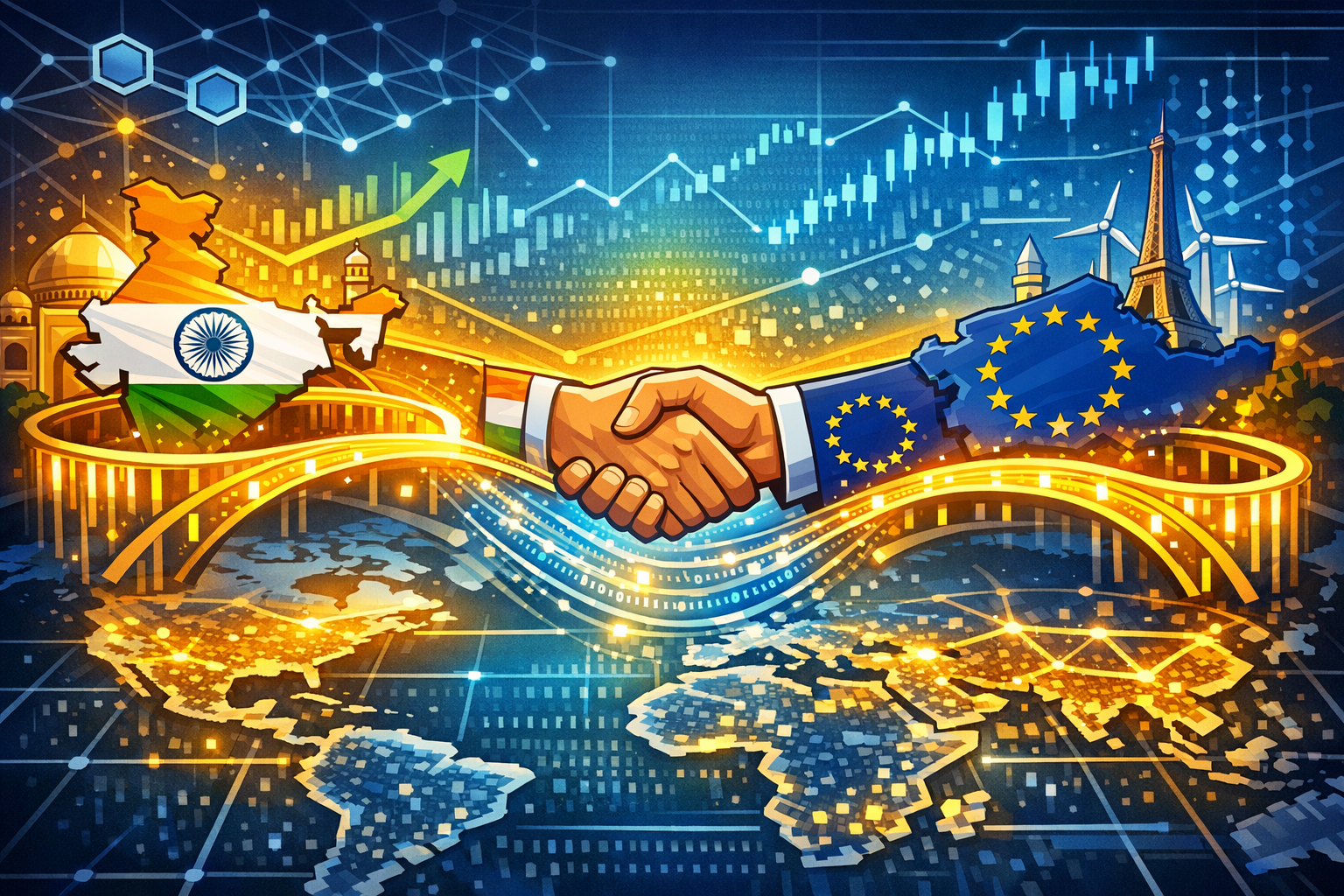
The European Union and India announced the conclusion of a historic Free Trade Agreement on January 27, marking the largest deal ever for both sides.
The agreement establishes a free trade zone covering around two billion people and concludes negotiations that began nearly two decades ago.

European Commission President Ursula von der Leyen described the pact as a strong signal supporting rules-based international cooperation.
The announcement comes amid rising geopolitical tensions and ongoing global economic pressures, including trade disputes involving the United States.
Indian Prime Minister Narendra Modi and EU officials emphasized the historic nature of the agreement during events held in New Delhi.
Economic impact and trade provisions
The agreement underscores both parties’ commitment to open markets and predictable trade rules between the EU and India.
Current trade between the two partners exceeds 180 billion euros annually, supporting hundreds of thousands of jobs across EU member states.
Under the deal, tariffs on nearly all EU exports to India are expected to be reduced or removed, potentially doubling goods exports by 2032.
These tariff changes could save European exporters an estimated four billion euros per year in duties.
According to official EU reports, this represents the most extensive trade access India has ever granted to a partner economy.
Implementation and next steps
The EU plans to publish the finalized draft texts, followed by legal review and translation into all official EU languages.
Once approved by EU institutions and ratified by India, the agreement can formally enter into force.
Negotiations for the EU‑India FTA originally began in 2007, were paused in 2013, and resumed in 2022.
Both parties are seeking to deepen economic ties and diversify trade relationships as part of a broader global strategy.


